The Art of Storytelling
Celebrating Beatrix Potter
Some 125 years after the first publication of The Tale of Peter Rabbit, the stories of Beatrix Potter are still re-read and enjoyed by millions.
Part of that comes from the writing, of course, that captures any number of small domestic dramas, and has absolute confidence in the lives of rabbits, ducks, hedgehogs, frogs, foxes, and squirrels.
Much of the magic lies in the illustrations; so precisely drawn that a lone figure summons an entire literary world. Peter Rabbit springing through a vegetable patch, Squirrel Nutkin perched on a tree branch, Mr Tod strolling through the forest with a sense of heavy self-importance. Each is etched with such character that they are known in an instant.
The clarity of the illustrations is one reason Beatrix Potter’s characters lend themselves so naturally to sculpture. Their forms are clean and immediately recognisable, their personalities unmistakable, each one carrying its own small world. They seem to belong to kitchen gardens and woodland paths, to ponds and flower borders – the sort of places where a bronze robin perched on a spade feels not like decoration, but simply part of the scene.
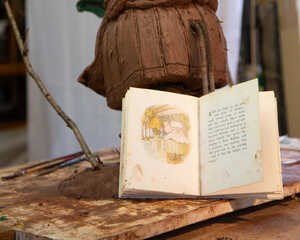
Returning to Beatrix Potter’s original illustrations
Beatrix Potter understood that an animal’s charm lies in its true nature, even if said animal might have cause to wear a waistcoat. She humanised her characters without ever losing sight of their instincts – a balance that gives her work remarkable literary resilience and fertile ground for creating bronze sculptures.
In her drawings, much is understated: the subtle, twitchy anxiety of Samuel Whiskers, or the earnest, somewhat foolish dignity of Jemima Puddle-Duck as she alights 'rather heavily' in her poke bonnet.
The workshop’s task is to capture those quiet truths and cast them into form. Sculpture requires a figure to function in the round, possessing a logic that holds up from the side and the back as clearly as the front.
It must inhabit physical space and catch the light convincingly. While the original illustration remains the constant guide, the success of the bronze relies on identifying what is essential in the drawing and carrying it forward with a steady, creative hand.
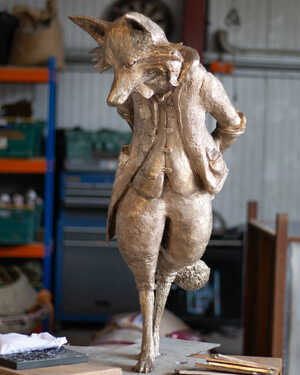
From page to clay to bronze
Certain elements of an illustration transfer almost immediately. Some silhouettes are so definitive that they survive the shift into bronze with remarkable ease. Peter Rabbit is the classic example, but Mr Tod is equally striking; a lean, wiry frame and silhouette give him plenty of familiar presence.
This stage of interpretation is among the most compelling parts of the process. Potter’s illustrations are alive with movement, but it’s a restrained energy – held with a sharp glance, a sudden pause, or a slight, inquisitive lean.
The sculpture must preserve tension without appearing static; feeling as though the character has been caught in a fleeting moment. Bronze is the perfect medium to capture the finest nuance of expression while possessing a physical weight that feels rooted in the earth. Potter’s world is a landscape of tangible, tactile things – and bronze is the perfect vessel for those ideas.
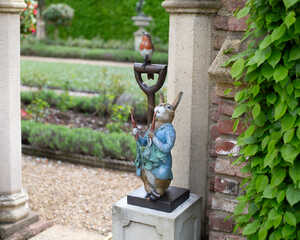
Building a Beatrix Potter collection
While Peter Rabbit is the natural starting point for many collectors – reckless, lovable, and forever one poor decision away from catastrophe – he is only the beginning of the story. Our Beatrix Potter collection shines a light on this beloved literary world, giving more nuanced characters the space and presence they deserve.
From a quietly determined Jemima Puddle-Duck, a comically misfortunate Mr Jeremy Fisher, to Samuel Whiskers, who’s never far from the peril his own mischief invites. A whole cast of memorable creatures, each with their own habits, personalities and predicaments – translated into bronze and ready to be part of an ever-growing garden display.
Meanwhile, our growing Beatrix Potter miniature range is a wonderful gateway into the world of literary-inspired sculptures; smaller, beautifully realised figures that do not lose their force despite their shrunken dimensions. They can live on a shelf among books, on a windowsill, on a desk, or in a sheltered part of the garden where they wait to be discovered.
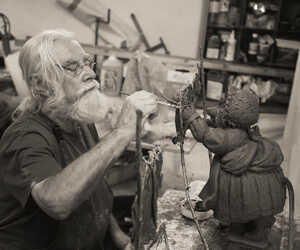
Keeping Beatrix Potter alive through art
For those who have long loved these stories, our sculptures offer a way to live alongside Potter’s characters with a lasting permanence.
They are designed to settle into the landscape, becoming part of the garden's history just as the books have become part of our own.
To explore the collection in more detail, pleaserequest a brochureor get in touch with the workshop. We would be delighted to help.
 Updating page...