Chapter One
Our Story
For nearly thirty years, Robert and James have been creating art together. What began as an experiment in alchemy in a back garden has grown into a lifelong pursuit of capturing magic.
Living and working amongst the rolling hills of West Dorset and the Jurassic Coast, we found our inspiration not just in the landscape around us, but in the landscapes of our childhood imaginations. We wanted to build a bridge between the literary worlds we loved – Wonderland, The Riverbank, The Hundred Acre Wood – and the real world where we plant our flowers and watch the seasons change.
We are a workshop in the truest sense – dusty, noisy, and filled with the smell of wax and clay, driven by a friendship founded on a shared love of storytelling.
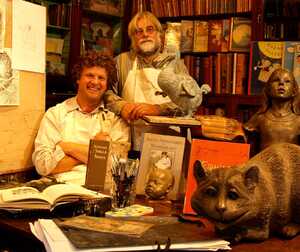
“The challenge is to breathe life into these magical characters.”
James Coplestone
Chapter Two
From Book to Bronze
“‘Drawing is an intelligent act,’ says Ingres – It’s where we start to learn what we are looking at.”
Robert Ellis
Chapter Three
The Process
“Holding the original illustration is a privilege.”
Before a single tool is touched, we immerse ourselves in the source material. Working with the official estates of Beatrix Potter, Lewis Carroll, and A.A. Milne requires a deep respect for the original artist's intent. We study the earliest editions and original sketches, ensuring that every subsequent decision honours the legacy of the creator.
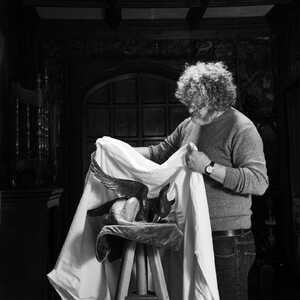
We cannot sculpt what we do not understand. Drawing is our way of "learning" the character – translating a flat, two-dimensional line drawing into a figure that occupies space. We sketch the character from behind, from above, and in profile, imagining the views the original illustrator never drew, filling in the blanks with artistic intuition.
Chapter Four
Meet the Team
From master sculptors and creatives to horticultural specialists, the team behind the literary bronze magic.
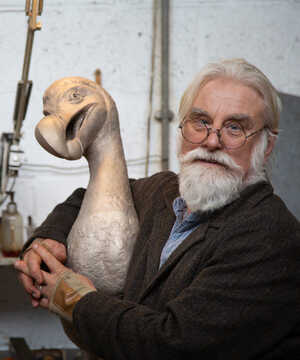
Robert Ellis
Co-founder and sculptor, Robert translates beloved illustrations from page to clay and bronze, modelling new pieces, refining foundry work and preparing waxes for casting, always focused on natural character, detail and craft.
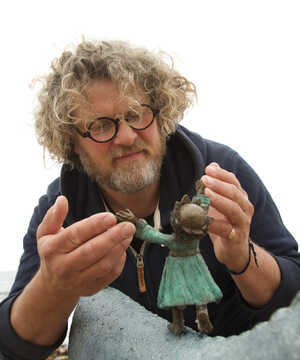
James Coplestone
Co-founder, sculptor and Creative Director, James shapes the direction of the collection, choosing characters, developing ideas and modelling in clay, with a gift for characterisation that brings literary figures to life in expressive bronze.
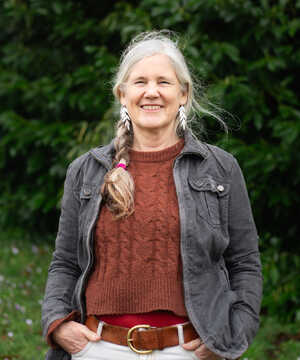
Karen Watkins
Director, with a particular focus on horticulture and customer care, Karen guides clients to imagine sculptures within their garden spaces – helping create a sense of story and natural beauty in every setting.
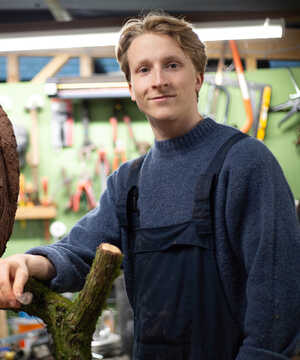
Louis Coplestone
Louis, a Junior Manager working across sculpture and advertising, is part of the studio's next generation. Combining visual storytelling with hands-on studio work, he completed his first solo project in 2025.
Sculptures and Water Features
Write your own chapter
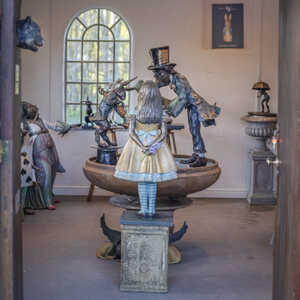
Our sculptures are designed to be lived with. To weather the frost, to gather moss, and to become part of the family. We invite you to find the character that speaks to your story.
FAQs
Commonly asked questions on processes, aftercare, delivery, and installation – answered.
How do I choose between hot cast and cold cast bronze?
Hot cast is traditional poured bronze and is generally the best choice for year round outdoor placement. Cold cast is a bronze resin composite, lighter and more sensitive to knocks and extreme conditions. If you are deciding, start with our guide and we can talk you through what suits your setting.
How long do bronze garden sculptures take to make?
Because each piece is handmade to order, hot cast bronze typically takes 16 to 24 weeks and cold cast bronze typically takes 12 to 16 weeks.
Do you deliver internationally?
Yes. We regularly ship worldwide and can discuss options for your location, or you can select “Overseas” at checkout and the team will follow up.
Can you leave a bronze statue outside?
Yes. Hot cast bronze is well suited to outdoor life, and both materials will develop character over time. The key is sensible siting, avoiding obvious hazards, and simple care if you want to keep the surface looking a certain way.
Why are hot cast sculptures more expensive?
A hot cast bronze sculpture, the more expensive method, uses an ancient process which dates back many thousands of years. It involves creating a hollow wax image of the sculpture which is coated in a thick ceramic layer over a number of months.
Bychoosing a hot cast bronze sculpture, instead of a cold cast bronze sculpture, you can guarantee it will last generations—whether indoors or outside in the elements.
How long will bronze last outdoors?
A bronze garden sculpture will last a lifetime, and many generations after you. The natural properties of bronze means your sculpture is incredibly robust and protected against the elements.
How do you protect a bronze statue outside?
Although a hot cast bronze garden sculpture is incredibly robust, you need to be a little more careful with your placement of cold cast sculptures as they will not withstand any kind of blunt impact. Position your cold cast sculpture away from older trees or anywhere it’s likely to topple over onto a hard surface.
How do you take care of a bronze statue?
Cold cast bronze resin castings will ‘weather’ like bronze in that they will patina a verdigris finish if left alone. To retain their radiance, we recommend a neutral wax coating at least twice a year. The highly polished areas can be restored by using a metal polish and a buff up.
The environment your bronze is placed in will also affect the surface quality. Salty air, bird excrement, plants and trees which produce certain saps, all these substances can change the look of the bronze.
Cold cast bronze resin sculptures are not as robust as hot cast bronze, so please take this into consideration when handling them. Always choose a solid part of the sculpture when lifting, avoiding the thinner and more vulnerable areas, or other protruding parts.
For hotter climates, or in extreme heat, consider removing them from direct sunlight.
How do you keep bronze from turning green?
Because of the high copper content in hot cast bronze and cold cast bronze sculptures, they will eventually develop a beautiful verdigris patina. The `living surface’ will change over time to create a stunning natural green aesthetic. If you’d like to slow down this organic process, you can apply a neutral wax.
What is bronze made from?
Bronze is made up of copper and tin, sometimes other elements such as phosphorus or aluminium are added in.
How can you tell the quality of a bronze garden sculpture?
As well as feel the weight and innate solidity of your bronze sculpture, you can also visually see the mirror finish. While metals are usually shiny, non-metals generally have a dull appearance. Meanwhile, older bronze pieces will develop a warm, rich patina on the surface.
There should not be white, crusty film or white dust on any part of the bronze sculpture. This is a sure sign that the piece is not genuine bronze. It’s also possible to use a plastic magnet to test the quality of your bronze sculpture. As magnets are attracted to ferrous metals such as cast iron, if your magnet sticks, you can be sure that it’s not the real thing.
You can also perform a simple tap test to check the quality of the bronze. If you strike a hollow place on the sculpture with a wooden dowel, true bronze will produce a satisfying ring, assuring you of its authenticity.
Is there a weight difference between hot and cold cast bronze?
As a hot cast sculpture uses a pure molten bronze, as opposed to a bronze resin composite, the weight difference, and, in turn, the robustness, is considerable. It’s also worth noting that due to the difference in the casting process, there are some subtle differences in size between the two sculptures. An Alice in Wonderland garden sculpture in hot cast bronze, for example, will be approximately 3% smaller than its cold cast counterpart. Theprocess of making both hot and cold cast bronze sculpturesis fascinating.
Request a brochure
Prefer to browse from home?
Experience the magic of the workshop at your own pace.
Request our complimentary brochure to explore the full collection of bronze water features, sculptures, and their stories.
 Updating page...