5 More Aesop’s Fables That Everyone Should Know
Aesop’s Fables have become so naturally embedded into modern culture that we often use their idioms and turns of phrase without even realising their origins.
Slow and steady wins the race, crying wolf, and sour grapes can all find their provenance in the Greek storyteller's work.
Timeless cautionary tales, passed from one generation to the next, have continued to prove a rich source of visual inspiration for us here in the workshop.
Animals with distinctive forms and striking moral imagery feel very much at home in a garden setting – here, a story can move from the page into bronze and settle beautifully among the planting, water, and hard stone.
Let’s take a look at some more of Aesop’s most beloved tales:
1. The Crow and the Pitcher
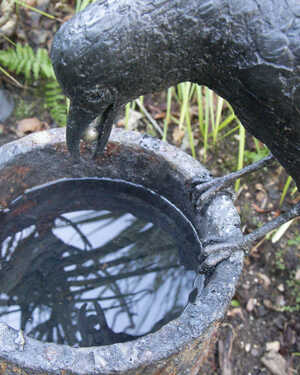
A thirsty Crow found a Pitcher with some water in it, but so little was there that, try as she might, she could not reach it with her beak!
A crow, exhausted with thirst, comes upon a pitcher with a small amount of water at the bottom. However hard he tries, his beak cannot quite reach it. Rather than give up, in a flash of ingenuity, he begins dropping pebbles into the vessel one by one until the water rises high enough for him to drink.
It's easy to see why this fable works so well as a water feature. The imagery and components of the story are already in place. Bird, vessel, water, and stone. In a garden, it’s a scene that feels entirely at home, and the sculpture carries the timeless lesson with it.
The moral
In a pinch, a good use of our wits may help us out. Necessity is the mother of invention.
2. The Goose That Laid the Golden Eggs
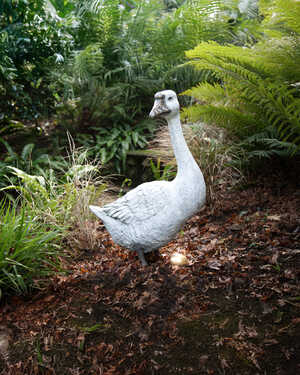
But it was not long before he grew impatient with the Goose because she gave him only a single golden egg a day. He was not getting rich fast enough!
A classic cautionary tale of a countryman and his wife, who are astonished to discover that their goose lays a golden egg every morning. While at first they are grateful for their good fortune – before long, greed overwhelms them. Convincing themselves that the goose must contain a store of riches inside, they dispatch the poor bird in the hope of an immediate golden windfall. Instead, they lose the bird and the daily gift it provided.
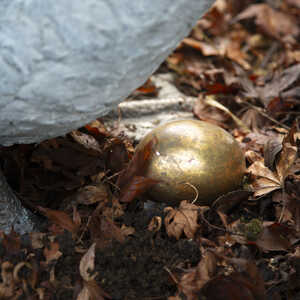
Ultimately, a dark tale, but as a stunning garden sculpture, the goose radiates magical visual charm, while the shimmering golden egg serves as a bold focal point that will enchant any outdoor space.
The moral
Greed has a way of destroying the very thing it desires.
3. The Fox and the Crow
One bright morning as the Fox was following his sharp nose through the wood in search of a bite to eat, he saw a Crow on the limb of a tree overhead.
A crow perches in a tree with a piece of cheese in her beak. A fox, keen to get hold of it, begins to praise her appearance with great enthusiasm. Surely, he suggests, a bird of such beauty must also have a splendid singing voice! The crow, delighted by the compliment, opens her beak to sing, drops the cheese, and watches the fox run off with it.
The fable still rings true because flattery remains such an effective tool. Aesop’s animals may speak plainly, but their faults are recognisably human, and part of the reason these stories continue to hold their place in modern culture.
The moral
Beware of those who praise too readily and want something in return.

4. The Hare and the Tortoise
A Hare was making fun of the Tortoise one day for being so slow. "Do you ever get anywhere?" he asked with a mocking laugh.
A hare, amused by the tortoise’s slow pace, agrees to race him and then promptly assumes the result is settled before the contest is over. Certain of victory, he rests too long by the roadside. The tortoise continues steadily and, in one of the most famous endings in all fables, crosses the finish line first.
Here is another fable with obvious sculptural potential, one which we will be realising in the coming months. A classic moral tale, so familiar that readers can picture its composition at once and the lessons contained within.
The moral
Steady effort often wins where confidence alone falls short. Slow and steady wins the race.
5. The Lion and the Mouse
A Lion lay asleep in the forest, his great head resting on his paws. A timid little Mouse came upon him unexpectedly, and in her fright and haste to get away, ran across the Lion's nose.
A lion spares the life of a mouse he has caught, entertained by the tiny creature’s promise that the favour may one day be repaid. Some time later, the lion becomes trapped in a hunter’s net. Hearing his roars, the mouse returns and gnaws through the ropes until the lion is set free.
A fable that still speaks to readers of all ages, containing themes and life lessons that resonate across generations. Namely, that kindness is never wasted, and one should not judge others by their size or appearance!
The moral
A small act of mercy, remembered in time
Why Aesop’s Fables work in the garden
Aesop’s Fables translate naturally into sculpture because the stories are already visual. They tend to revolve around a single memorable image or encounter, and the animals arrive with their own clear identities. In a garden setting, those qualities become even more powerful.
That is part of the enduring appeal of the Aesop bronze pieces at Robert James Workshop. They bring ancient stories into view with permanence and longevity – like the tales themselves – allowing readers to encounter them in a new form.
If you would like to find out more about the current Aesop's Fables sculptures, or what creations we have in the works, do take a look through the collection or get in touch.
 Updating page...